A Timeline of Samoa's History
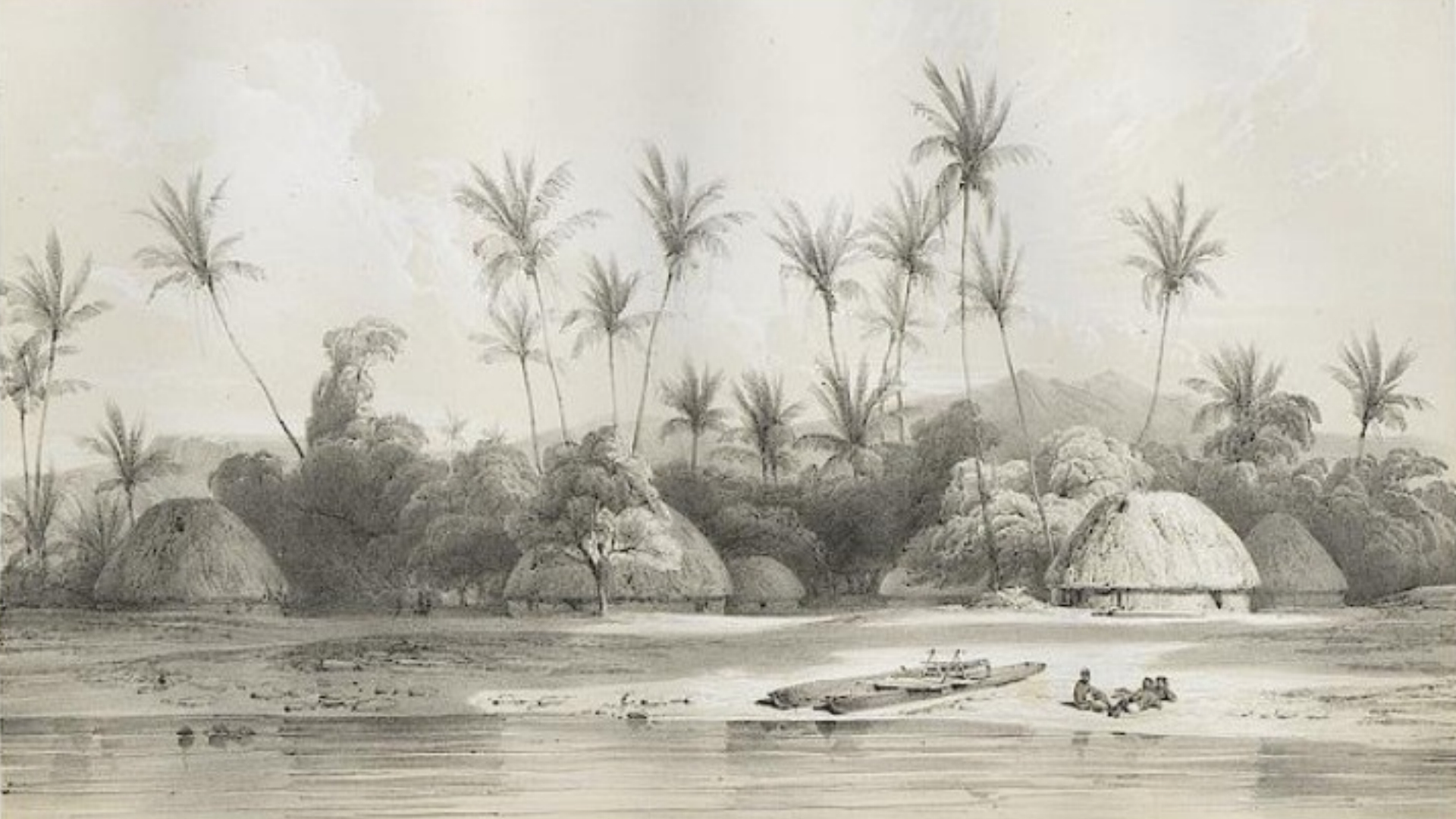
How old were you when you first started wondering about the history of your people?
I was well into my 20s.
Before then, being Samoan was all about to'ona'i on Sundays with the extended family. It was about weddings and funerals, and making sure to sulu my 'ie when I was washing the dishes or serving hot drinks to my circle of elders.
Being Samoan was about my Samoan birth certificate. It was about the songs and dances we learned in my mom's dance group when we were growing up. It was about belonging to the Samoan cultural group at school, whether I signed up for it or not.
My cultural education always included mention of our ancestors and the sacred wisdom they passed along to us. But I never questioned who these mysterious ancestors were, or what the world was like when they lived in it.
An introduction to Samoan history
Then I read something about Samoa's Black Saturday. I don't even remember how, probably on an old online bulletin board. What I learned was that a prominent Samoan leader was shot to death by New Zealand police during a peaceful protest along Apia's coastline.
I had almost no context for this story. I had no idea what the protest was about, what New Zealand was doing in Samoa, or who the martyr was. The story sounded like it belonged to somebody else's country. How was this the Samoa of my family, and my ancestors?
My family ran a Samoan newspaper, and through it I was blessed to meet a lot of knowledgeable people in our community. But it was only after I encountered the Black Saturday story that I began asking them questions.
It's been a lot of years since then. I've learned so much and documented the experience in several blog posts. But while my knowledge of Samoan history has grown, in my brain the details are still scattered across hundreds of years. And my sources? I had a general idea of where most details came from, but not enough to cite the exact reference.
So early this year, I made it a goal.
Samoa's timeline, in order
I want to put all the bits and pieces of knowledge I have in order, starting as early as we can trace and continuing through to Samoa's independence in the 1960s. I know so much Samoan history has happened since then, but let's start with the first part.
I want to be able to quote a year, from the beginning of time to 1962, and know exactly what was happening in Samoa at the time. And I want to be able to attribute everything I learn to its exact source.
Now, a word on sources.
Who recorded Samoa's history?
We know that Samoa's record of history is oral in nature. It is preserved in our language, our arts and crafts and our customs. I have sat with my uncles, who were extremely knowledgeable matai ali'i and tulafale, and listened as they traced our cultural practices to events in history. I have interviewed my aganu'u teachers, and their words created the foundation of knowledge I am building on.
But for this project, I am focusing on what has been written about Samoa. Yes, that means records produced by visitors to Samoa, and the Samoans they taught to read and write. Most were missionaries and travellers who, according to the record, gathered their own knowledge from the Samoans of their day.
As sceptical as I might be about the accuracy of what they were told, or the biases in how they interpreted it, these written records are the only sources I can read for myself. The lauga of our matai, the mamanu in our tatau and siapo, the skills that our tufuga carry, these records are as tangible as the writings, but they need to be translated. I will not disrespect that precious work by attempting it alone.
So I am sticking with the histories of Samoa that were written down, even if most of those words were not written by our people. To get the best and probably most accurate picture I can piece together from these records, I'm growing my sample size as large as I can, so I capture every piece of written material in existence, from as many scribes as I can find.
Here's the method.
The records
So far we have 12 books written about Samoan history, and I'm cross-referencing them:
Louis-Antoine de Bougainville, A Voyage Round the World (English translation, 1772)
Jean-François de La Pérouse, The Voyage of La Pérouse Round the World (English translation, 1798)
John Williams, A Narrative of Missionary Enterprises in the South Sea Islands (1837)
Charles Wilkes, Narrative of the United States Exploring Expedition, Vol. II (1845)
George Turner, Nineteen Years in Polynesia (1861)
George Turner, Samoa, a Hundred Years Ago and Long Before (1884)
Laulii Willis, The Story of Laulii, a Daughter of Samoa (1889)
Robert Louis Stevenson, A Footnote to History (1892)
John B. Stair, Old Samoa (1897)
Augustin Krämer, Die Samoa-Inseln (German, 1902–03)
Te'o Tuvale, An Account of Samoan History up to 1918 (written 1918)
S. Percy Smith, Hawaiki: The Original Home of the Maori (4th edition, 1921)
They're all digitised and all in the public domain, so you can read every one of them yourself. I am slowly adding them to our reading room here on anavatau.com, and I'll link them as they go up. Anybody who wants to follow along with what I'm discovering can read these books too. I hope you do.
I am using these books in good faith, understanding that they were written with the biases, scientific knowledge and prejudices of their day. I know of other resources from the era (for example, a Fred Henry book that I only have the Samoan translation for) but these are the only written resources I have access to now that I can share, and I am going to mine them for every morsel of historical information I can find.
Timeline Samoa, an Anavatau project
My goal is to start from the beginning of Samoa. Where did we come from, according to our own traditions? Where do the records say we came from? Who were we at the beginning of our story, before any outside influence? And when our people and our islands were so-called 'discovered' by other people, what were the first things they wrote about us?
Some of these stories I've already seen snippets of, and I cannot wait to delve into them because they are crazy. (I can say that, right? Because they are.) Did you know that some of the first Europeans to set foot on Samoan soil were massacred by the locals? Makes you wonder about stories we've heard about our ancestors looking out for the white god. Speaking of which, did you know Samoans were very much involved in spreading Christianity throughout the Pacific? And did you know we had a cult in Samoa, run by a Samoan man?
These are only wayfinders for me to follow as I uncover Samoa's written history. Along the way, I'll share everything I find here on anavatau.com in the Talafaasolopito series, and on our Anavatau Instagram account.
I hope you'll join me on this voyage.
About the Author
Lilieni
Writer & Builder | Founder, Anavatau
Lillian Arp is a Samoan-born writer and software engineer, and a lifelong student of Samoan language, culture and history. She built the Anavatau Heritage Archive when she got tired of hunting the web for Samoan resources. She publishes under Lilieni, the Samoan form of her first name, because that's what her grandmother called her.
https://anavatau.com